
Автор — pim25
Вначале желательно прочитать «Где брать тормозные трубки? Решение проблемы»
Что же делать с более длинной (метр и более) магистралью, если, к примеру, она почти вся в хорошем состоянии, уже закреплена десятком кронштейнов, а коррозией/демонтажем повреждены только последние 10 см с фланцем? Тут мне пришлось придумывать другой выход.
Прежде всего, я оценил длину повреждённых участков и заказал у вышеупомянутого WP новые медные трубки чуть большей длины со стандартными фланцами «папа» (если быть точным, WP-138) на концах.
Далее, там же я купил (также через Exist.ru) переходники (муфты) Т-124 «мама-мама» с нужным сечением:
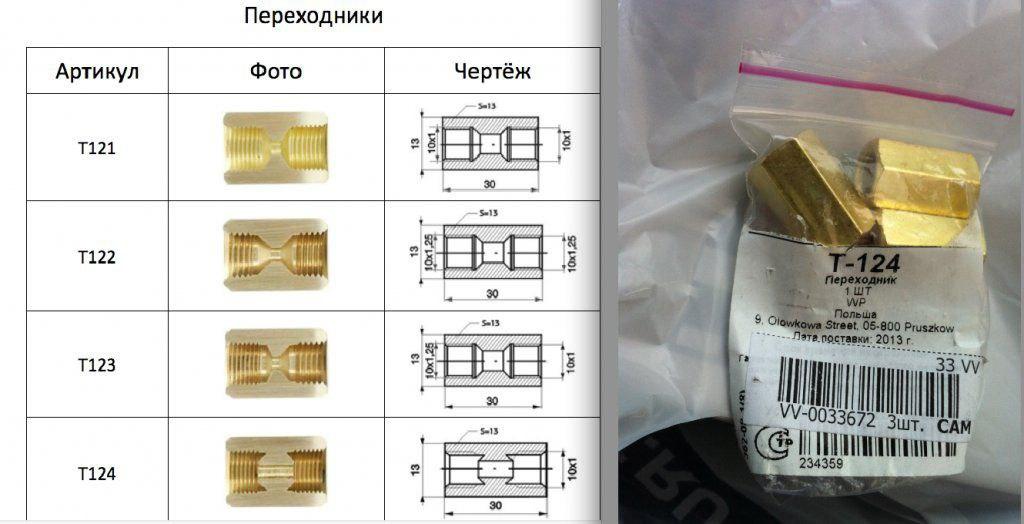
Теперь оставалось только обрезать негодные участки магистралей, развальцевать концы и применить купленные детали для удлинения трубок. Однако тут оказалось всё не так просто. Как я уже упоминал, заводская развальцовка торм. трубок на японских авто – это «двойной конус» (Double Flare). Учитывая это, в моей ситуации вальцеватель должен удовлетворять следующим требованиям:
1) Делать развальцовку «двойной конус»;
2) Быть пригодным для работы со стальными трубками;
3) Иметь малый размер с возможностью работы «по месту».
Если с первым пунктом всё хорошо – (наборы на «двойной конус» в продаже имеются), то со вторым и третьим совсем никак – я не увидел в продаже вальцевателей под сталь, и при этом все наборы требуют довольно большого пространства для работы либо демонтажа трубки.
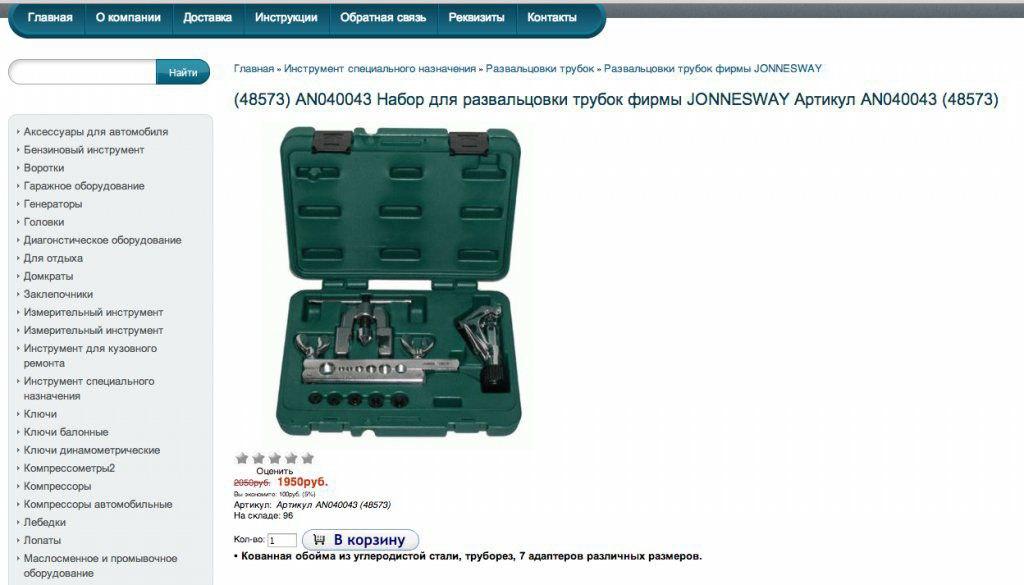
Самое лучшее, что я увидел в продаже – это профессиональный набор для развальцовки трубок разного диаметра Jonnesway, весьма приятный на ощупь, но работающий только с медью и алюминием;
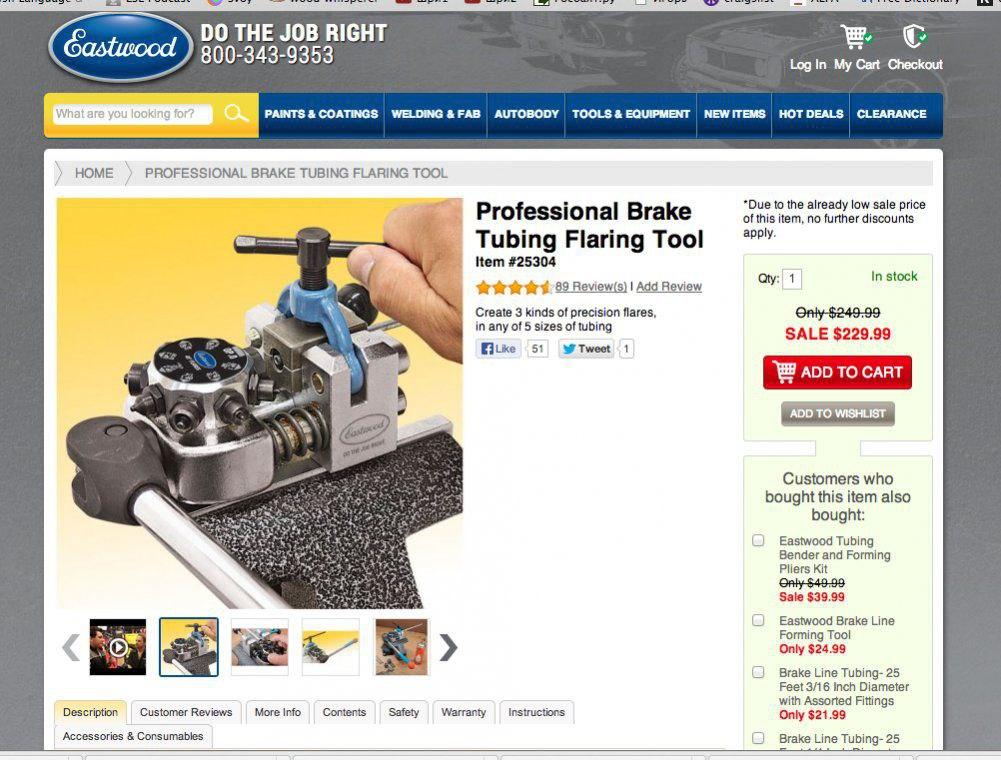
Самое качественное, что я нашёл в сети – это инструмент от компании Eastwood, который вальцует даже твёрдые тормозные трубки из нержавейки, но только будучи зажатым в тиски на верстаке…
Решение нашлось довольно далеко от дома — у англичан, где через E-Bay было найдено и куплено приспособление от Franklin Tools, удовлетворяющее всем моим требованиям по типу вальцовки, материалу трубок и компактности:
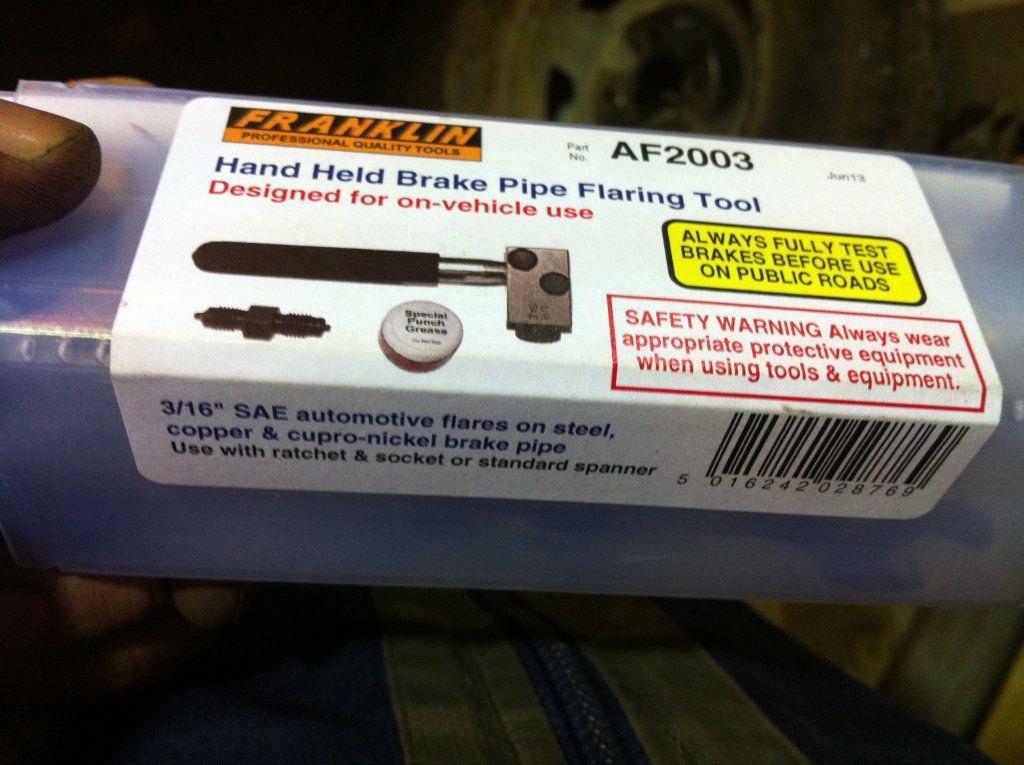
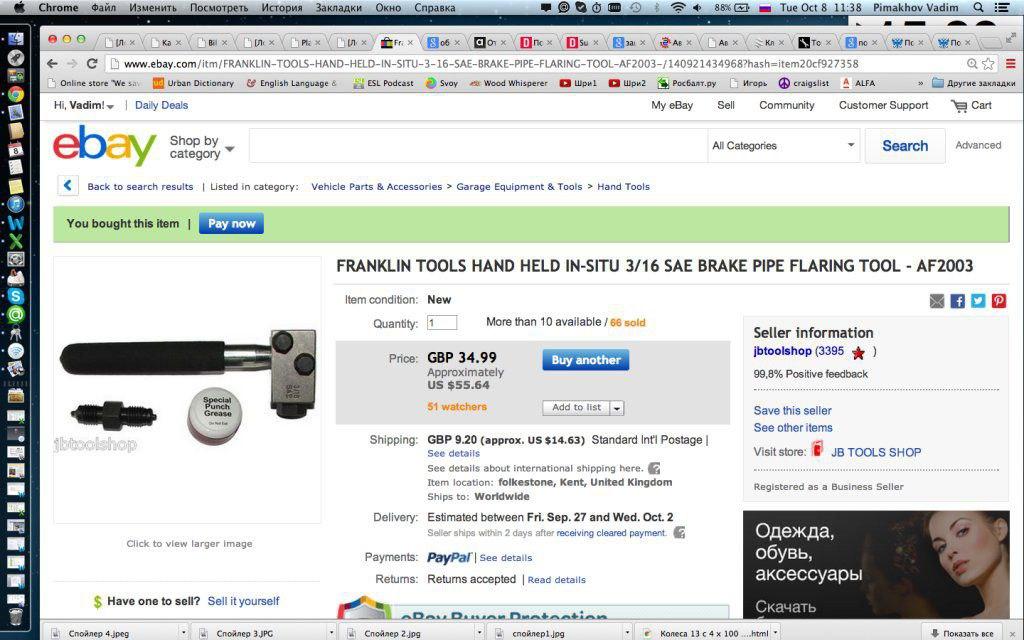
Ну что сказать — отлично придуманный и изготовленный инструмент, с помощью которого я и произвёл необходимые работы с трубками. Одну из таких операций давайте разберём на конкретном примере.
Вот так выглядела трубка под передним левым крылом, обломившая при откручивании фланца, после удаления ржавой части:
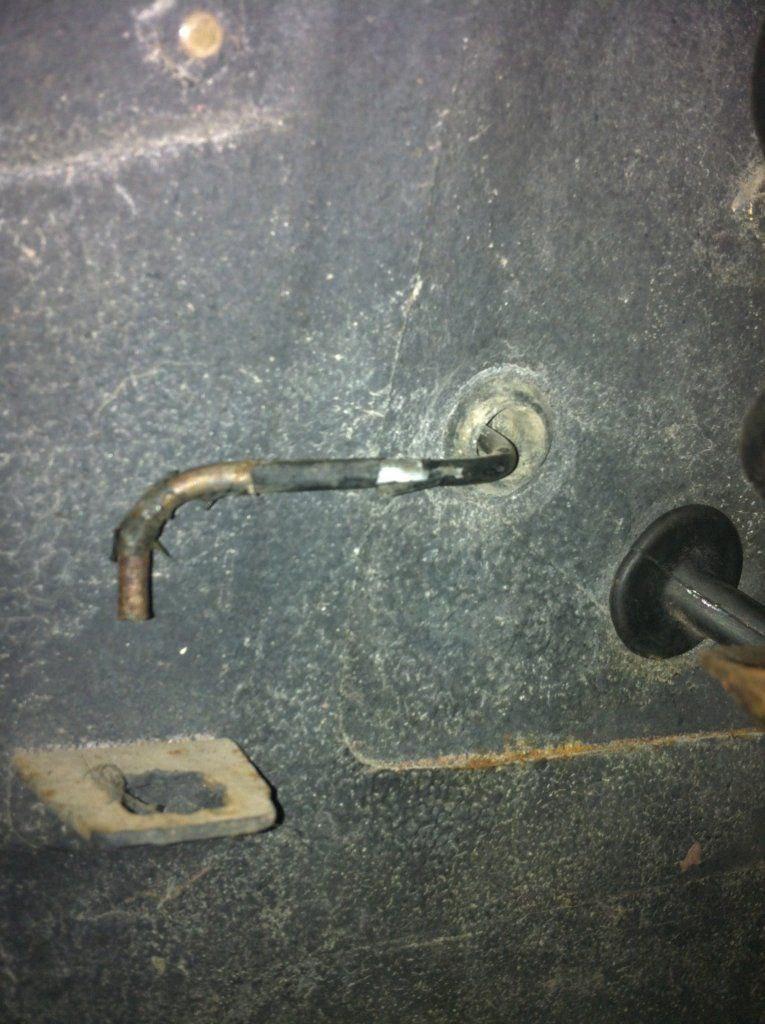
Видно, что до стыка со шлангом теперь не хватает каких-то трёх сантиметров, однако подогнуть трубку нет никакой возможности из-за близости её сквозного прохода через внутреннюю арку крыла.
Общая длина этой трубки, которая берёт своё начало у распределителя главного тормозного цилиндра, составляет более одного метра. При этом она частично проходит по моторному щиту в труднодоступных местах за двигателем – поэтому решаем, что целесообразнее её удлинить, а не заменить.
Находим подходящее место в моторном отсеке:
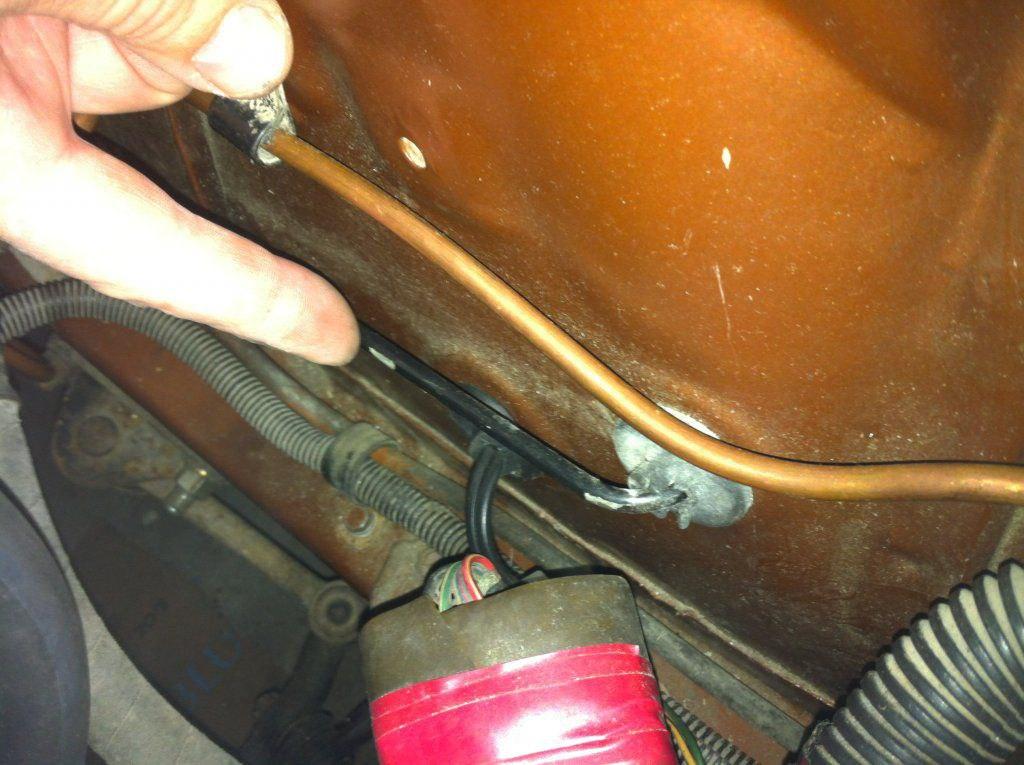
И перепиливаем трубку от руки ножовочным полотном:
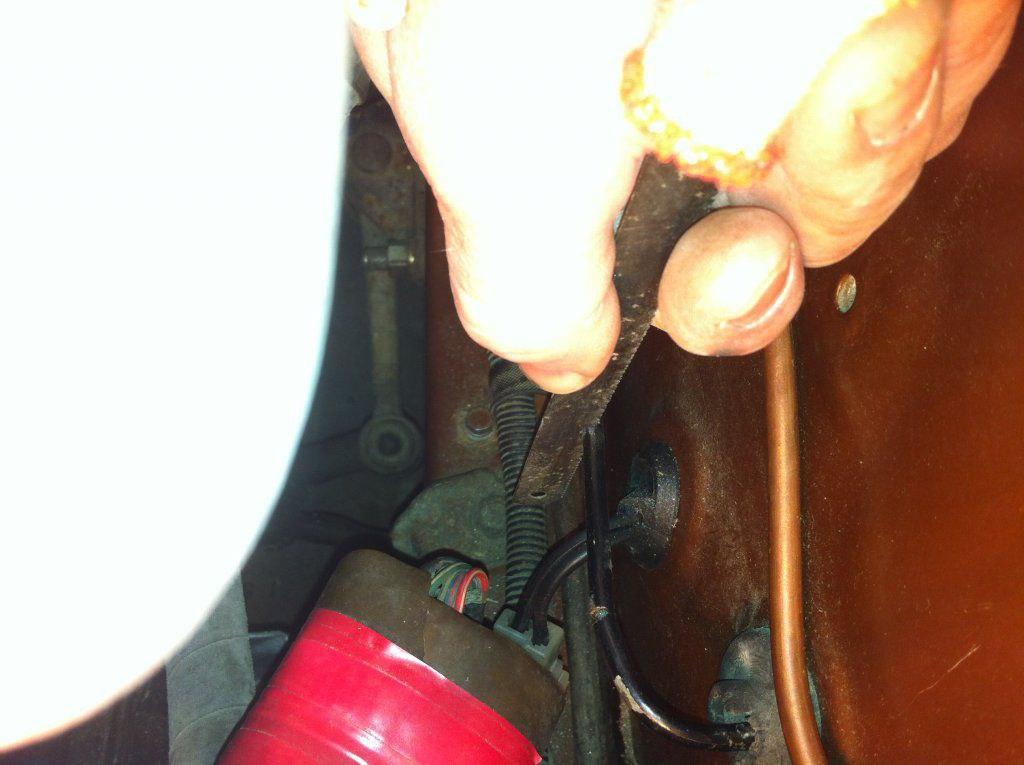
Смазываем конец трубки под фланцем смазкой против коррозии и прикипания:
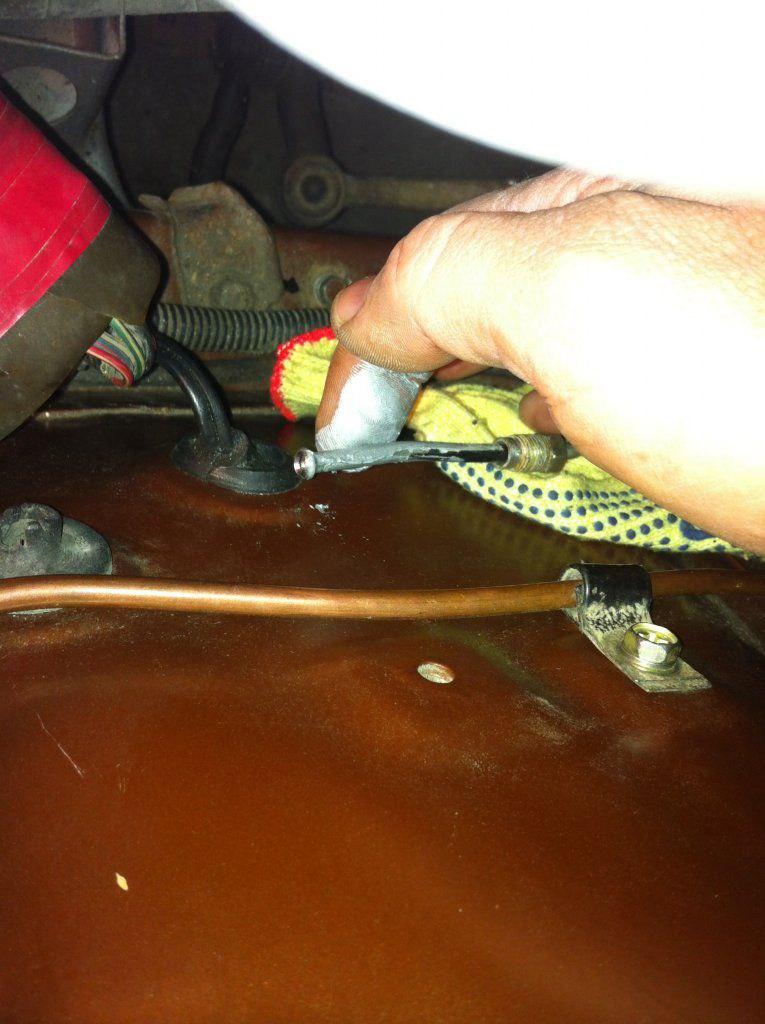
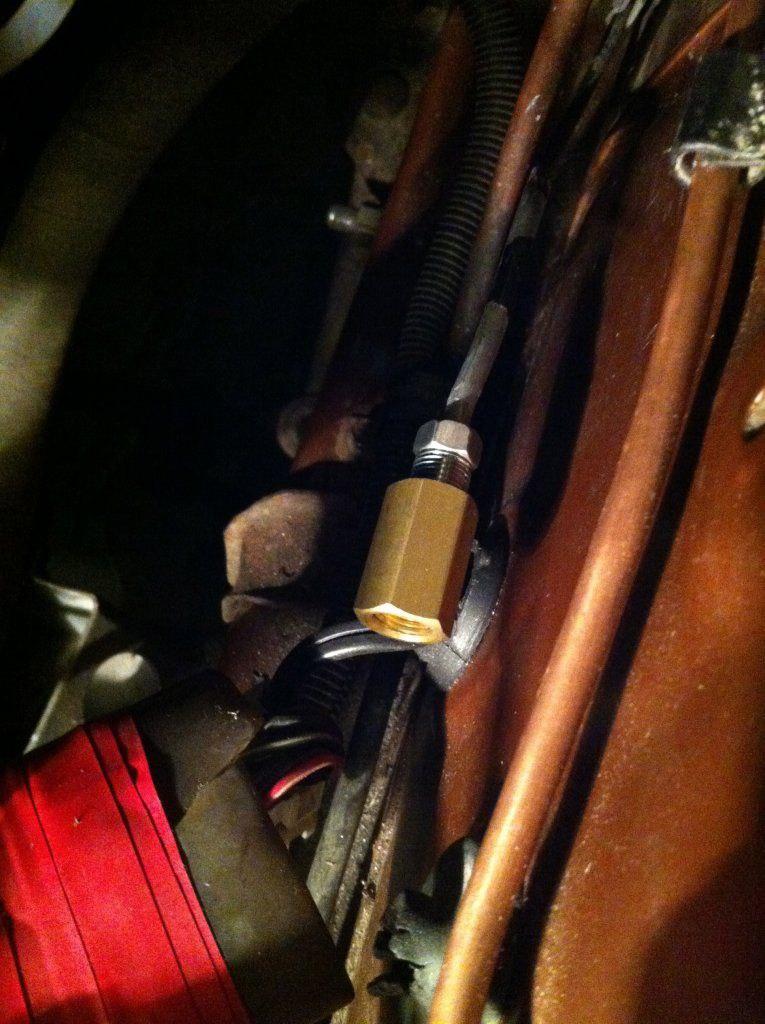
И накручиваем на фланец соединительную муфту:
Затем из куска мягкого провода изготавливаем шаблон для «коротыша» и по нему гнём новую медную трубку:
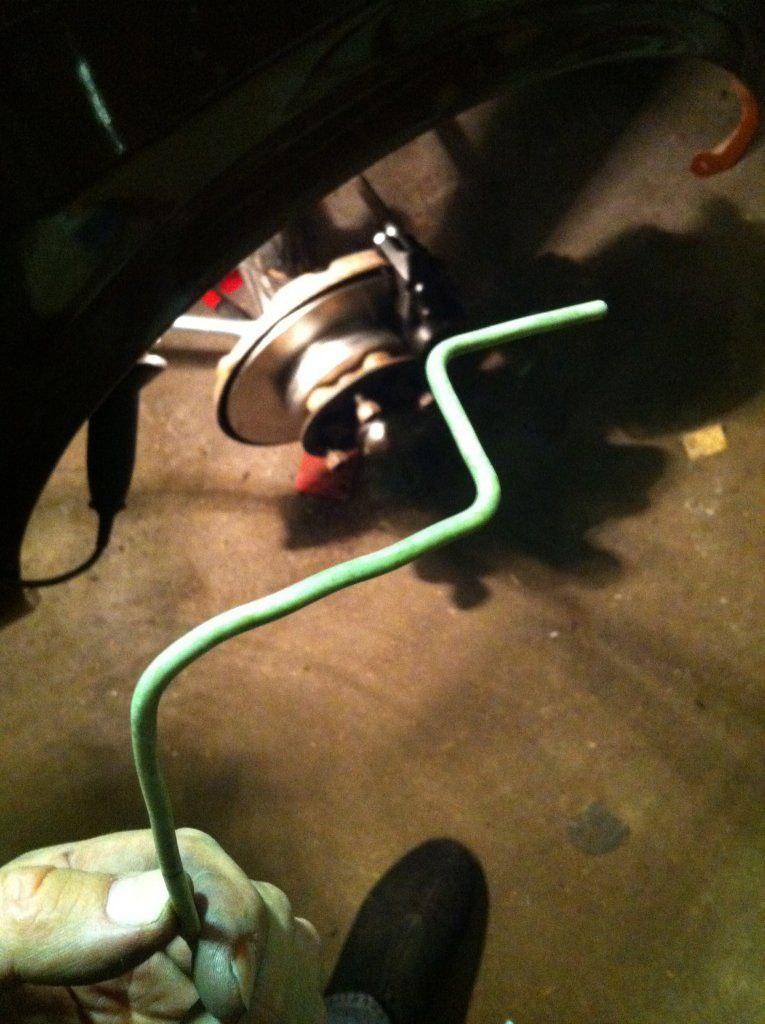
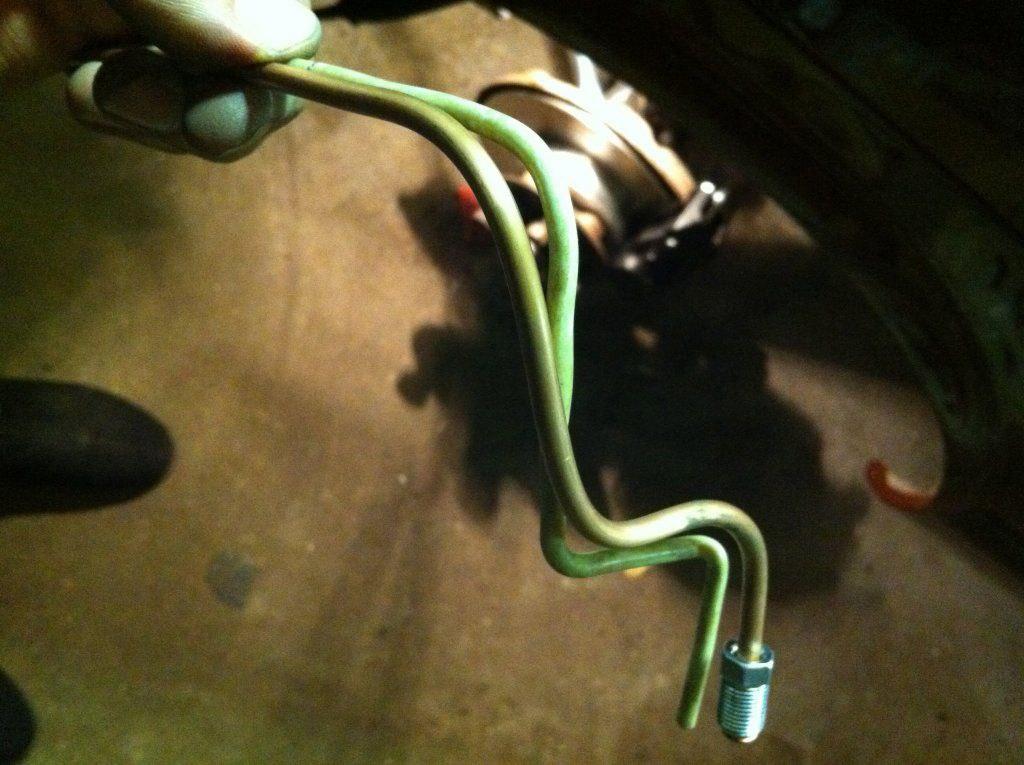
которую обрезаем и затем развальцовываем, не забыв предварительно надеть фланец! С тормозной медью наш инструмент справляется вообще играючи, и в итоге получаем необходимую нам трубку нужной формы и длины
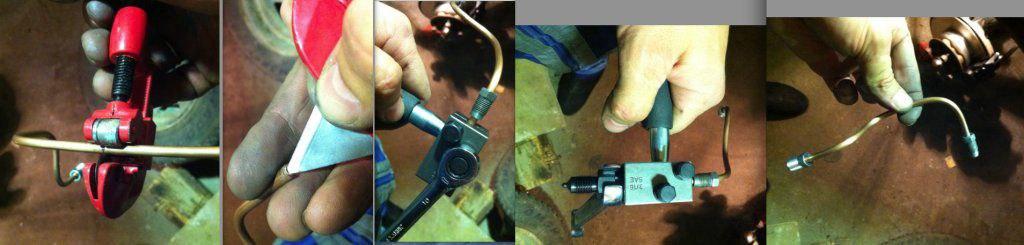
Соединяем её с муфтой, для которой во избежание вибрации делаем доп. крепление:
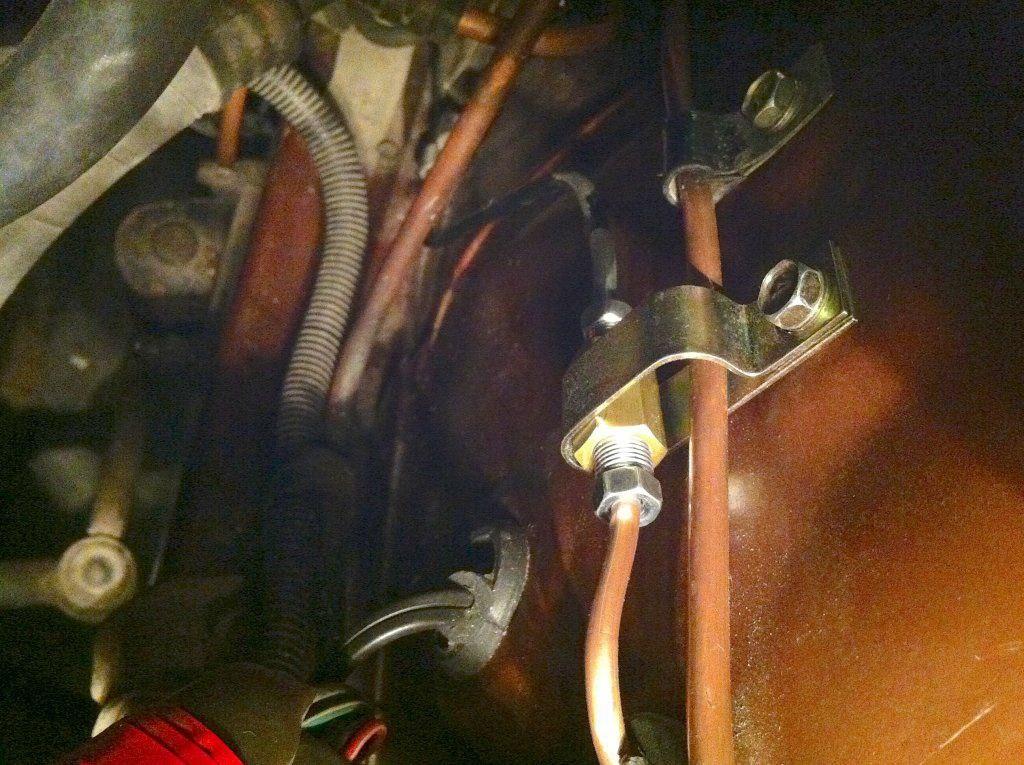
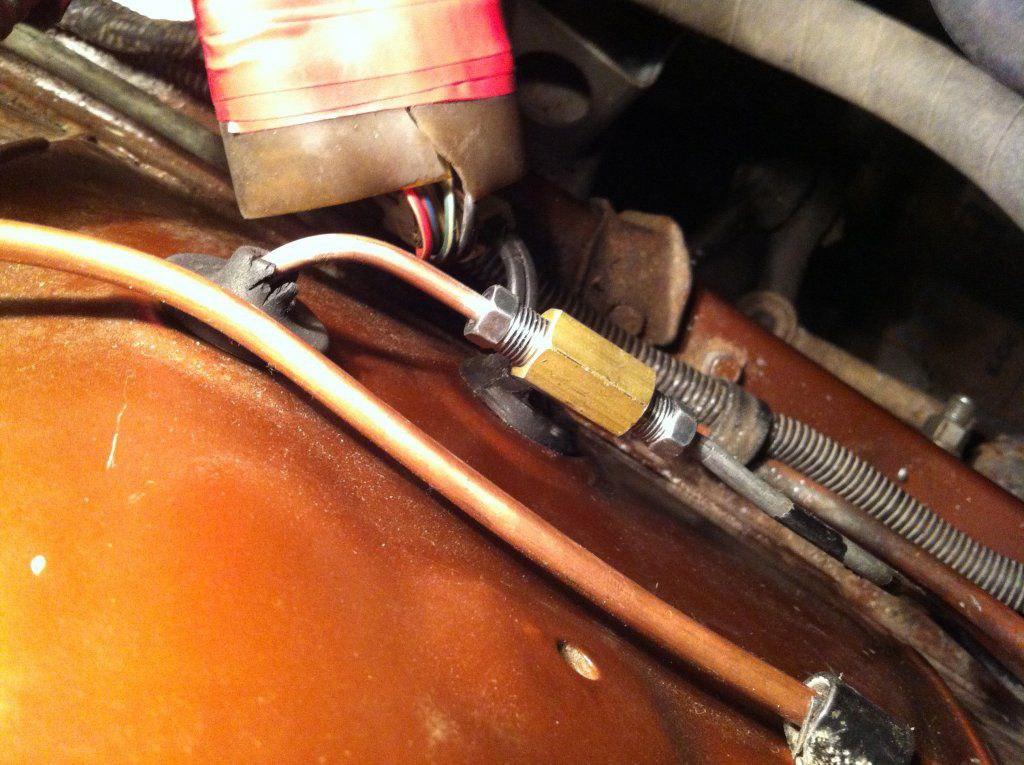
В результате всех наших усилий — с применением подходящего инструмента — после окончательной сборки наблюдаем со стороны колеса всё в лучшем виде:
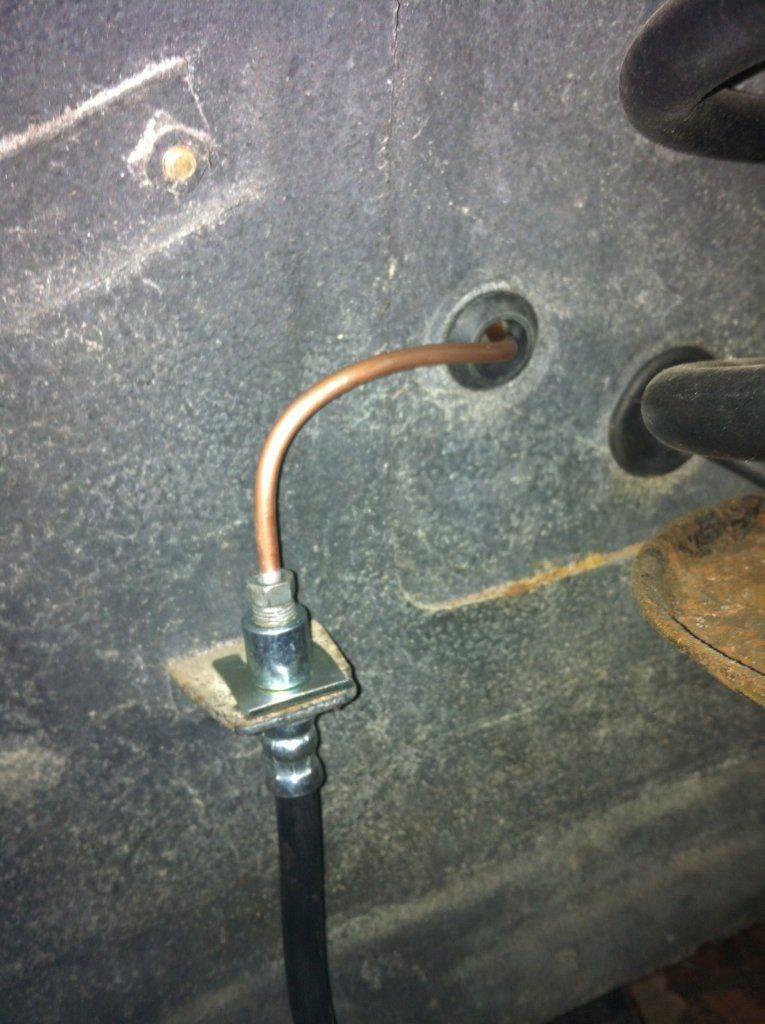
Комментарии
Пока нет одобренных комментариев.