Японские государственные регистрационные знаки отличаются размером, цветом фона и текста, а также правилами нанесения иероглифов и цифр. Ниже — систематизированный разбор: от габаритов пластины до транзитных номеров.
Размеры номерных знаков
Автомобили более 8 т или вместимость от 30 пассажиров
Точные размеры зависят от муниципалитета
Тип транспорта, объём и цвета
| Тип | Двигатель, см³ | Цвет номера | Цвет текста | Размер |
|---|---|---|---|---|
| Частные ТС | >600 | Белый | Зелёный | Средний или большой |
| Коммерческие ТС | >600 | Зелёный | Белый | Средний или большой |
| Кей-кар (частный) | <600 | Жёлтый | Чёрный | Средний |
| Кей-кар (коммерческий) | <600 | Чёрный | Жёлтый | Средний |
| Microcar | 0–49 | Лазурный* | Синий | Очень маленький |
| Мотоцикл | 0–49 | Белый* | Синий | Очень маленький |
| Мотоцикл | 50–89 | Жёлтый* | Синий | Очень маленький |
| Мотоцикл | 90–124 | Розовый* | Синий | Очень маленький |
| Мотоцикл | 125–249 | Белый | Зелёный | Маленький |
| Мотоцикл | ≥250 | Белый | Зелёный | Маленький |
* На иллюстрациях ниже — учебные примеры с невозможным сочетанием элементов.
Различие по цветам
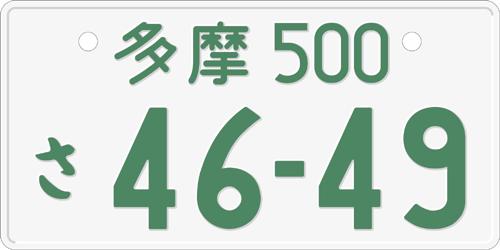


Верхние иероглифы — префектура
Два иероглифа вверху обозначают префектуру (область), где зарегистрирован автомобиль. Ниже — схема 23 наиболее известных и густонаселённых префектур.

Верхние цифры — код класса ТС
С 1998 года над основной строкой стоит трёхзначное число — код класса транспортного средства. Примеры диапазонов:
- 100–199 — крупные грузовики (от ~2000 см³)
- 200–299 — пассажирские автобусы (от ~2000 см³)
- 300–399 — легковые с объёмом более 2000 см³
- 400–499 — грузовики, минивэны, автобусы, джипы
- 500–599 — легковые с объёмом менее 2000 см³
Дополнительно учитываются габариты (длина, ширина, высота). Есть гипотеза, что в цифрах отчасти «зашит» объём двигателя — пока это лишь наблюдения по совпадениям.
Нижняя строка — хирагана
Под цифрами — один символ хираганы и четыре знака (цифры и точки). Набор хираганы зависит от типа регистрации.
Частный транспорт (>600 см³), белый номер
さすせそたちつてとなにぬねのはひふほまみむめもやゆよらりるろ
Прокатные ТС
れわ
Коммерческие (зелёный номер)
あいうえかきくけこを
Четыре символа и формат
Для большинства ТС серийный номер записывается как #Х-ХХ (цифра 1–9, дефис, две цифры 0–9; иногда допускаются буквы). Дефис обязателен.

Исключение: если номер начинается с 0, запись меняется — дефис не используется, вместо нулей ставятся точки по центру.
- Логический номер 00 0Х
- На пластине:
·· ·Х(точки вместо ведущих нулей) - Логический номер 0Х ХХ
- На пластине:
·# ХХ(# — цифра 1–9, Х — 0–9)
Транзитные номера
Внешне похожи на обычные, но перечёркнуты красной полосой. По сведениям от жителей Японии:
- если авто уже стояло на учёте — четырёхзначный номер часто сохраняют;
- если машину только ввезли — номер может быть произвольным;
- справа внизу — префектура, слева — город выдачи временных знаков.
Изначально транзиты предназначались для поездки в центр регистрации до постановки на учёт. Со временем ими стали пользоваться тюнингованные авто, не проходящие техосмотр — формально это серая зона, но лучше, чем ездить совсем без номеров.


Комментарии
Пока нет одобренных комментариев.